
FLIPBOOK: CREATION MYTH OF JAPAN
FLIPBOOK: CREATION MYTH OF JAPAN


Click the cover page image below to enjoy reading!
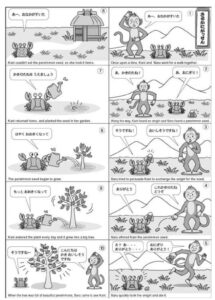
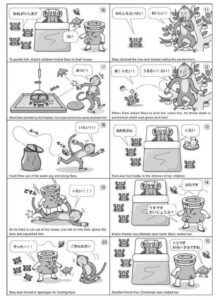
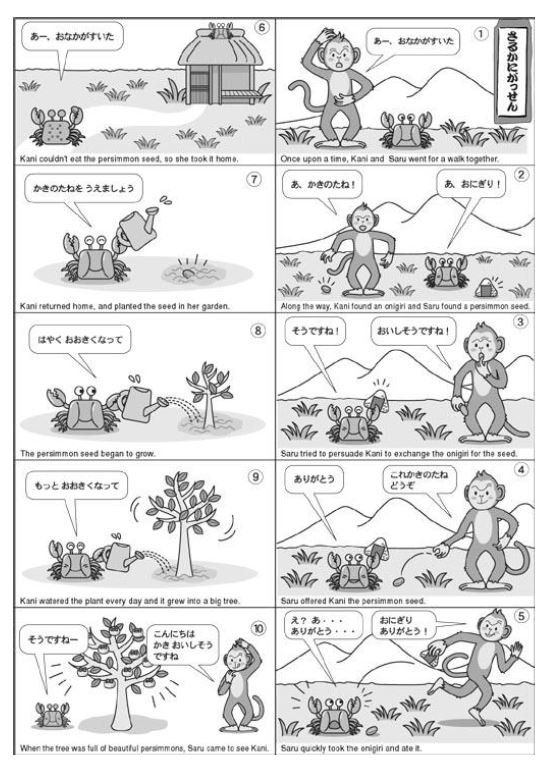
Students read a simplified bilingual flipbook of the folktale Sarukani Gassen, and discuss and reflect on the story and themes by answering the questions provided below.
さるかにがっせん, also known as “The battle of the monkey and the crab” is a Japanese folktale. さるかにがっせん is a cautionary tale, which warns against greed, selfishness, and cruelty. In this story, a greedy monkey (さる) tricks a crab (かに) into swapping a rice ball (おにぎり) for a persimmon seed (かきのたね). When the tree bears fruit, the monkey steals the persimmons and injures the crab. However, with the help of the crab’s children and their friends, the monkey is made to see the error of his ways.
Explore our other Nihongo flipbooks! → https://classroomresources.sydney.jpf.go.jp/resources/nihongo-flipbooks/
Here are some fun facts and symbolic meanings of the characters. Teacher may decide to use following points with students.
 さる native to Japan, is clever and cheeky, often seen in snowy hot springs. In this story, it symbolises cunningness and selfishness.
 かに are found in most coastal reef area in Japan. かに in the story represents honesty, hard work and patience.
 おにぎり (or おむすび), plays an important role in this story. The earnest crab trades the ready to eat おにぎり for a persimmon seed which requires patience.
 かき, originally from China, have been grown in Japan for centuries. They symbolise autumn in Japanese culture. In this story かきのたね the persimmon seeds, which かに plants and grows with care, represents hope and patience.
 うす is a traditional Japanese mortar used to pound mochi with pestle. In the story, its heavy and powerful presence symbolises justice and delivers final judgment.
About Revenge かたきうち
The main theme of the story is かたきうち (revenge), a common motif in Japanese theatre and folklore. Traditionally justified by Confucian ideals, such vendettas were outlawed in 1873. In the original さるかにがっせん, the crab is killed, and the monkey is avenged by the crab’s children, though modern versions are often less violent.
1. Role-play:
Students work cooperatively in groups or as a class to prepare and perform the skit of Sarukani Gassen for their classmates or at a school event.
*Please note that the following roleplay is a different version, so the language and details are slightly different from the flipbook introduced above.
Download Play: Sarukani Gassen
2. Read a Manga story of Sarukani Gassen
Click the following manga to download the pages.
3. Make Onigiri in class!
This resource was created by Tomomi Chiba and Himiko Negishi-Wood (February 2026).
Illustration by amachakoubou (https://amachakoubou.com/)
FLIPBOOK: CREATION MYTH OF JAPAN
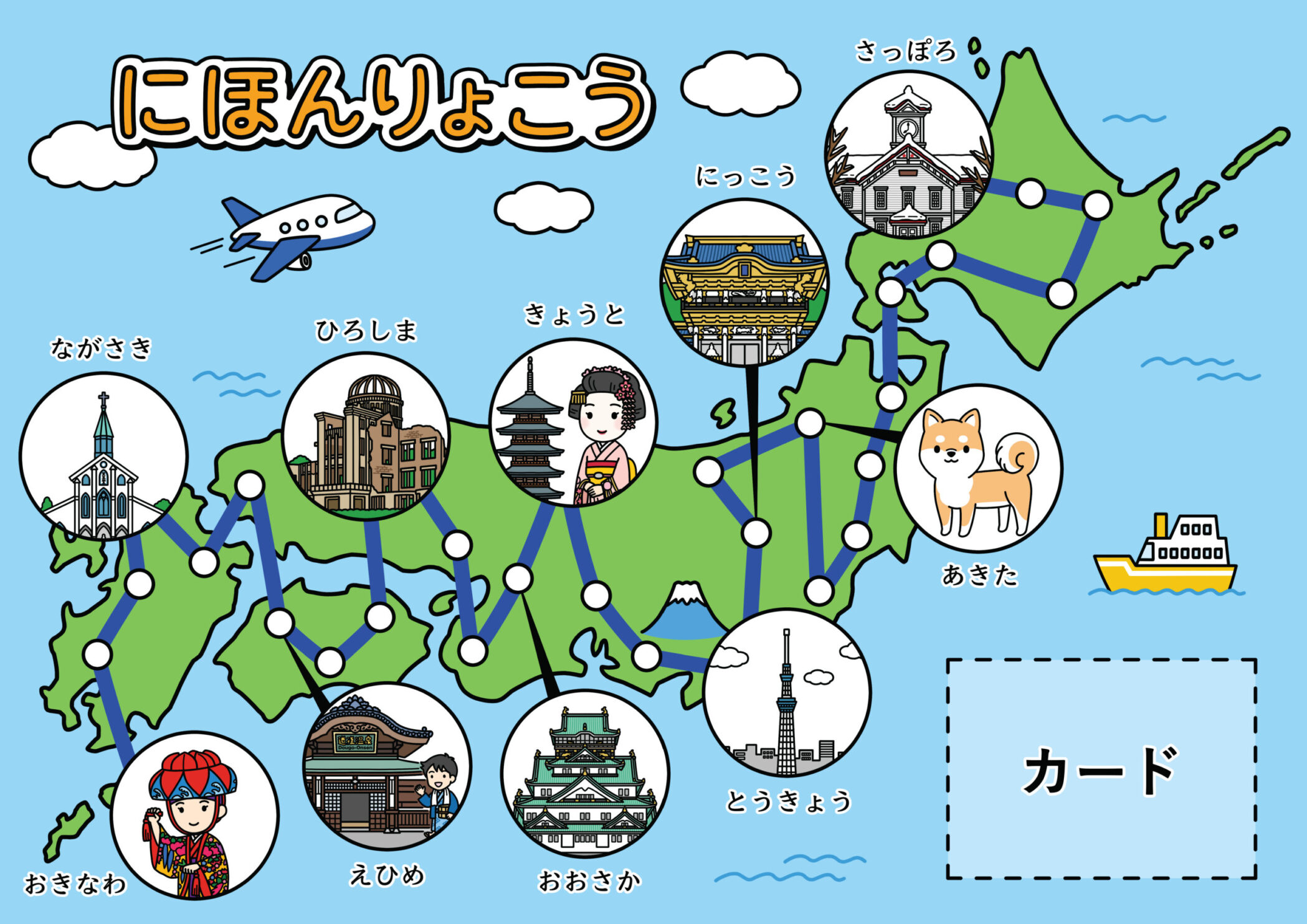
BOARD GAME: Travel Around Japan
FLIPBOOK: Ikkyu-san
Students explore spring in Japan through a flipbook and related activities.