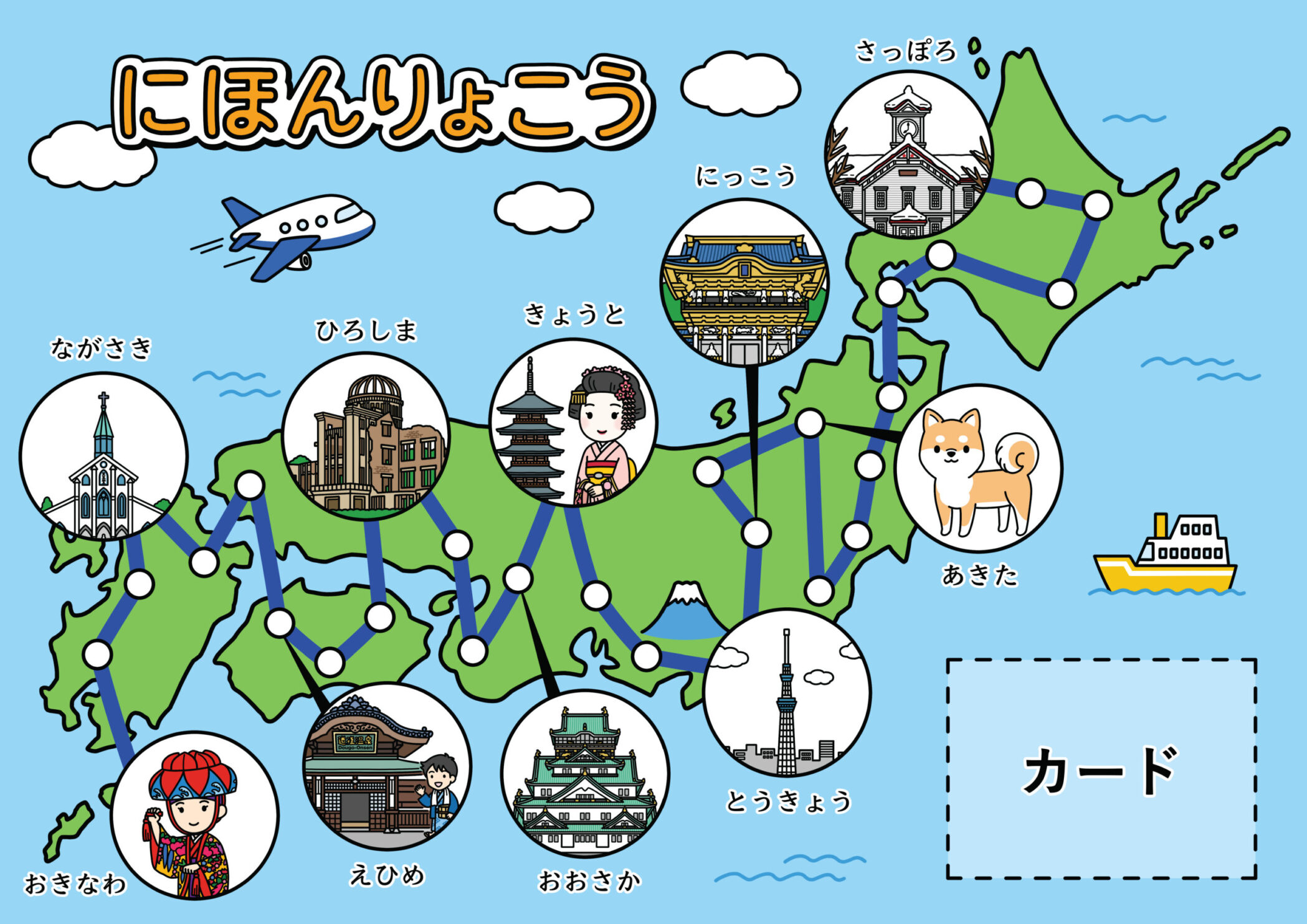
BOARD GAME: Travel Around Japan
BOARD GAME: Travel Around Japan

BOARD GAME: Travel Around Japan
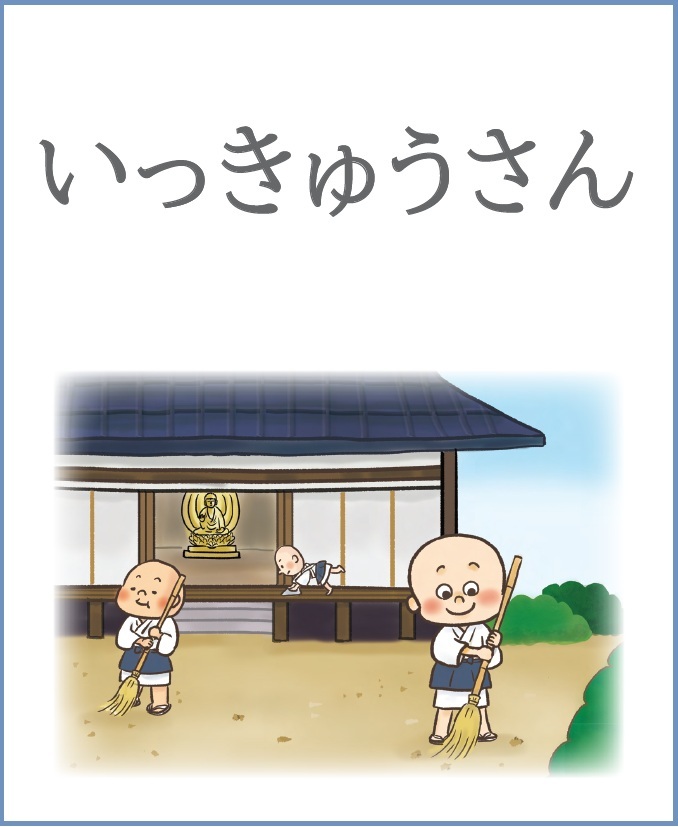
FLIPBOOK: Ikkyu-san
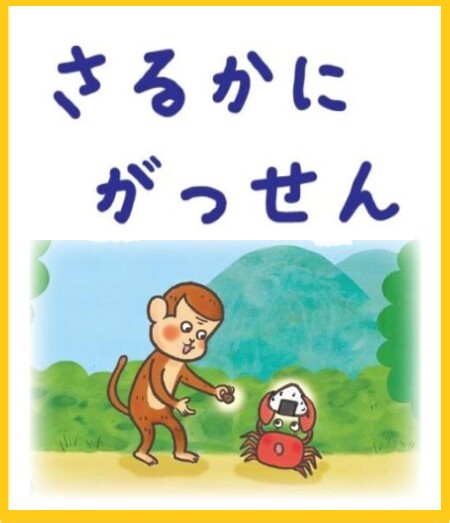
FLIPBOOK: Sarukani Gassen (The battle of the crab and the monkey)
Students read a simple version of the folktale in a manga format and answer 3 questions on the story and themes. Students are introduced to the “tanuki” and learn a Japanese song with 4 animal names and sounds (こぶた、たぬき、きつね、ねこ).

BOARD GAME: School

Excerpt: Students learn about Nihon no natsu (summer in Japan) through a flipbook and relevant activities.

BOARD GAME: Konbini

Students act out this story about the origin of the Juunishi (Chinese/Japanese zodiac). The play can be used by students not only in the classroom but also as a presentation for a school event. There are 15 parts.

Students try to be the first one to get four names in a row (horizontally, vertically and diagonally) on their sheet.

Activities using movies

Students practise sickness expressions in a role play between a doctor and a patient. The symptoms and advice are provided on cards.

Students play a barrier game where they have to identify all the shops in the row based on what each shop sells.

Students act out this children’s story which can be easily understood by an audience with or without knowledge of Japanese. The play can be used by students not only in the classroom but also as a presentation for a school event. There are 9 parts.

Students try to win as many job cards as possible by asking questions to try and determine which job is on the card.

Students learn about sumo rituals and play various sumo games in class.

This resource is a newly revised version of the Big Book in a PPT format. Students make a virtual visit to the zoo, using Japanese as they go around the zoo and talk to/about the animals.

This play, based on a Russian folktale, comes from a collection of plays and skits created by the ACT Japanese teachers’ group for use in their primary and junior secondary classrooms. Students work cooperatively in groups or as a class to prepare and perform the play for their classmates or at a school event.

This play, based on a Japanese folktale, comes from a collection of plays and skits created by the ACT Japanese teachers’ group for use in their primary and junior secondary classrooms. Students work cooperatively in groups or as a class to prepare and perform the play for their classmates or at a school event.

This play, based on a Japanese folktale, comes from a collection of plays and skits created by the ACT Japanese teachers’ group for use in their primary and junior secondary classrooms. Students work cooperatively in groups or as a class to prepare and perform the play for their classmates or at a school event.

This play, based on a Japanese folktale, comes from a collection of plays and skits created by the ACT Japanese teachers’ group for use in their primary and junior secondary classrooms. Students work cooperatively in groups or as a class to prepare and perform the play for their classmates or at a school event.

This play, based on a folktale, comes from a collection of plays and skits created by the ACT Japanese teachers’ group for use in their primary and junior secondary classrooms. Students work cooperatively in groups or as a class to prepare and perform the play for their classmates or at a school event.This story came from a NSW Dept of Education and Training School Magazine.

This play, based on a Japanese folktale, comes from a collection of plays and skits created by the ACT Japanese teachers’ group for use in their primary and junior secondary classrooms. Students work cooperatively in groups or as a class to prepare and perform the play for their classmates or at a school event.

This play, based on a Japanese folktale, comes from a collection of plays and skits created by the ACT Japanese teachers’ group for use in their primary and junior secondary classrooms. Students work cooperatively in groups or as a class to prepare and perform the play for their classmates or at a school event.

This play, based on a Japanese folktale, comes from a collection of plays and skits created by the ACT Japanese teachers’ group for use in their primary and junior secondary classrooms. Students work cooperatively in groups or as a class to prepare and perform the play for their classmates or at a school event.

This play, based on a Japanese folktale, comes from a collection of plays and skits created by the ACT Japanese teachers’ group for use in their primary and junior secondary classrooms. Students work cooperatively in groups or as a class to prepare and perform the play for their classmates or at a school event.

This play, based on a Japanese folktale, comes from a collection of plays and skits created by the ACT Japanese teachers’ group for use in their primary and junior secondary classrooms. Students work cooperatively in groups or as a class to prepare and perform the play for their classmates or at a school event.

This play, based on an old Japanese story, comes from a collection of plays and skits created by the ACT Japanese teachers’ group for use in their primary and junior secondary classrooms. Students work cooperatively in groups or as a class to prepare and perform the play for their classmates or at a school event.This story came from a NSW Dept of Education and Training School Magazine.

This play, based on the true story of a famous boy monk, comes from a collection of plays and skits created by the ACT Japanese teachers’ group for use in their primary and junior secondary classrooms. Students work cooperatively in groups or as a class to prepare and perform the play for their classmates or at a school event.

This play, based on a folktale, comes from a collection of plays and skits created by the ACT Japanese teachers’ group for use in their primary and junior secondary classrooms. Students work cooperatively in groups or as a class to prepare and perform the play for their classmates or at a school event.

Students survey each other about their likes and dislikes, experience & abilities.

Using sightseeing spots around Tokyo as the subject matter, students create complex descriptive sentences.

Students circulate around the classroom trying to find the person who has the other half of the sentence which matches their half. Each sentence is joined with the conjunction から.

Students answer questions giving advice for the situations described by the teacher.

Students practise making sentences with relative clauses. The categories are Animals, Subjects and Places. The students must match the word card with the description provided. Each description contains sentences with relative clauses.

Students complete an information gap task while they practise grammar involving how places seem/appear. The topic is major Japanese cities’ special attractions.

Students pretending to be job seekers are matched with one of four part time job options by answering a series of questions asked by the students playing the role of an employment agency.