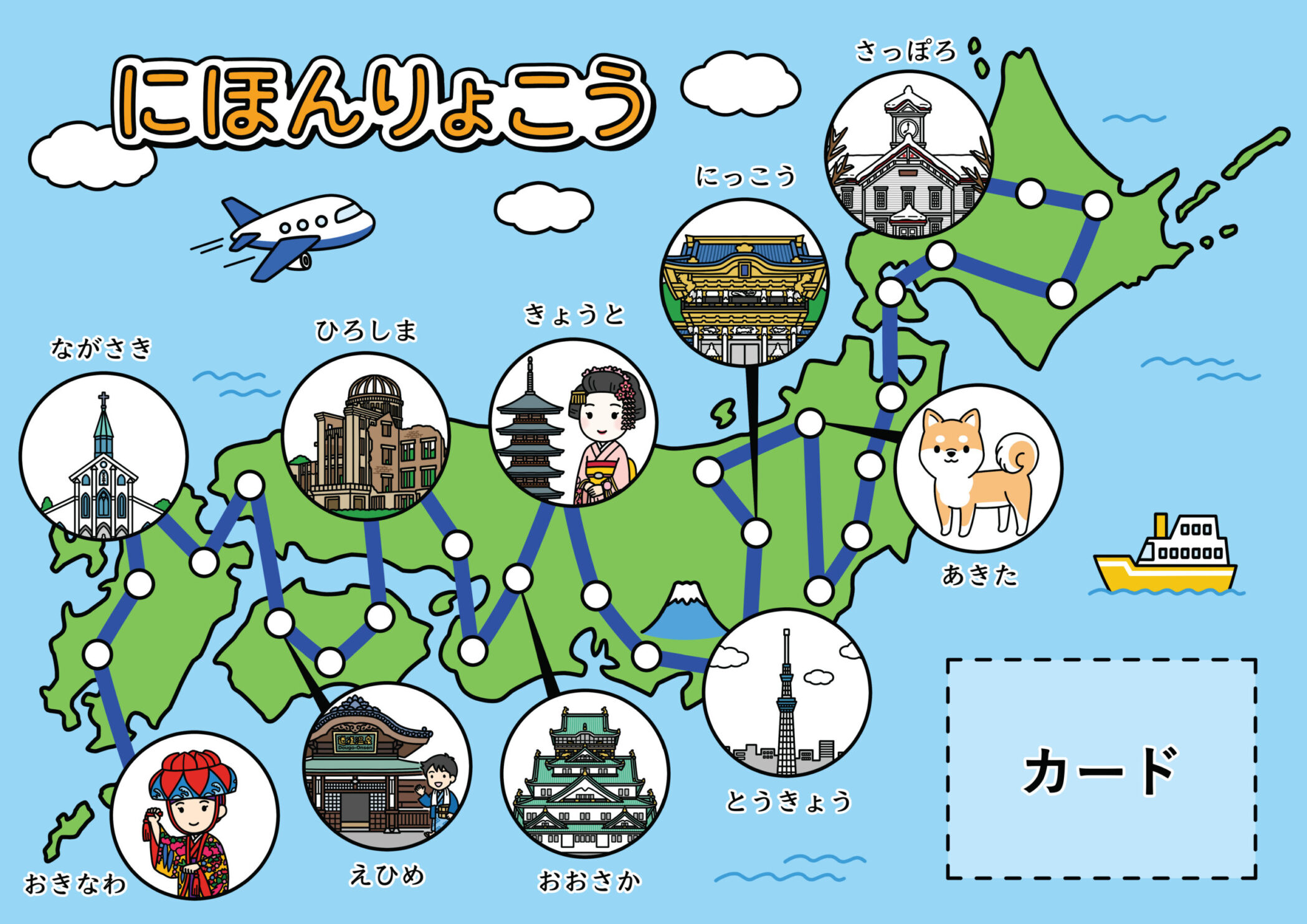
BOARD GAME: Travel Around Japan
BOARD GAME: Travel Around Japan


 Students practise constructing compositions, using 5 steps. The process teaches students to think about the structure of their texts and plan in advance. Sample texts and questions come from HSC Online.
Write a personal profile to attach to an application for a short-term scholarship to Tokyo.
[from: HSC Online, Continuers, Writing Personal World]
This is an example task from the NSW DET HSC website. It is simple to break down and most of the students are familiar with the topic. However, the procedure can be applied to any writing task.
First of all, analyse the task with your students by asking questions. For example: What is the text type? What is the topic? Who are you writing to? Who will read it, and therefore what Japanese style should be used? Formal or informal? and so on. You may make a chart like this and ask your students to fill it in.
| Text type | Topic | Target reader | Style |
| E.g. personal profile | about me | Japanese coordinator | politeです/ますフォーム |
Ask students to discuss in groups what kind of information should be included and make a list of sub-topics / key points. They may do this in either English or Japanese.
If your students are struggling to come up with ideas, you may give them a sample composition as a reference. But this is only for the purpose of picking up an idea or some keywords, not for copying the content. For this task you could look at Yamamoto Takayuki’s profile from the Japan Forum’s Deai resource kit and write out the sub-topics / key points.
The sample shown below follows this flow of ideas:
なまえ、学年、生年月日、うまれたところ、すんでいるところ、学校、趣味、将来
Sample
はじめまして。山本隆幸です。1982年4月に京都でうまれました。今、高校3年生で、大阪の高校に通っています。こどものときからスポーツが得意で、小学こう校3年生のときからずっと、アメリカンフットボール(アメフト)をしています。高校でもアメフト部に入っています。チームは全国大会で、2年続けて優勝しました。ぼくは生まれつき難聴ですが、がんばってアメフトを続けています。ぼくの趣味はショッピングで、クラブがない日は、ショッピングに出かけたりします。将来は、アメフットの強い大学に入りたいと思っています。お願いします。
After the students have decided what to write, they can focus on the grammatical expressions needed.
Eg. talking about future plans – ~たいと思っています。/ ~つもりです / ~よていです。
Eg. giving reasons for applying for the scholarship – ので
| なまえ | ジェレミー・ウッド です。 |
| とし/学年 | 16さいで、高校2年生です。 |
| うまれたところ | イギリスでうまれました。 |
| すんでいるところ | シドニーにすんでいます。 |
| 学校 | シドニー高校にかよっています。 |
| しゅみ、とくぎ | しゅみは、おんがくをきくことです。スポーツがとくいです。日本語を話すのが好きです。 |
| 将来について | 日本語のせんせいになりたいと思っています。 |
| おうぼのりゆう | 日本語をもっと勉強したり、文化を学びたいので、このしょう学金におうぼしました。 |
Look at the points in Step 3 and see which sentences can be combined.
For example:
1.~でうまれました。 + ~にすんでいます。 ⇒ ~でうまれて、~にすんでいます。
2.~さいです。 + 高校~ねんせいです。 ⇒ ~さいで、高校~ねんせいです。
3.~をすることがとくいです。 + ~になりたいと思っています。
⇒ ~をすることがとくいなので、~になりたいと思っています。
Encourage students to use conjunctions such as the ones below to create a coherent paragraph with a logical flow.
まず―first of all
そして―and in addition,
それから―and then,
それに―besides, in addition to that
つぎに―following, after, next,
また―also
Opening:
はじめまして、ジェレミー・ウッドです。イギリスにうまれてシドニーにすんでいます。
今、16歳で高校2ねんせいです。
Body
Closing:
日本語をもっと勉強したり、文化を学びたいので、このしょう学金におうぼしました。どうぞよろしくおねがいします。
Please use the handout with these 5 steps for your students.
[from: HSC Online, Continuers, writing, Living in Japan]
You are an exchange student in Japan. Write a report for your Japanese school newsletter comparing Australian and Japanese schools.
Title: オーストラリアと日本の高校
Opening:
みなさんは、オーストラリアの高校のことを知っていますか?
Body:
Closing:
オーストラリアの学校は日本とちがうところがたくさんありますが、にているところもこんなにたくさんあるんですよ。おもしろいですね。
[from: HSC Online, Continuers, Writing, Personal World Part A].
You are going to host a volunteer Japanese assistant in your school and home for three months. Write a letter to him or her describing your neighbourhood and school.
Greetings:
こんにちは ゆみさん。 お元気ですか。こちらはだんだんあたたかくなってきました。きょうは、ぼくの住んでいる町や学校について書きます。
Body:
Closing remarks:
ゆみさんに会うのを楽しみにしています。 しんぱいしないでくださいね。 また、てがみを書きます。 では、また。
3月3日 ジェレミー・ウッド
[from: HSC Online, Continuers, Writing, World of Work Part B].
You are going to host a volunteer Japanese assistant in your school and home for three months. Write a letter to him or her describing your neighborhood and school.
Title: E.g. 高校生のなんでもや (handy man)
Opening:
シドニーの高校生がなんでもやをはじめました。
Body:
Closing:
やすくて、はやくて、べんりです。 一度たのんでみてください。
Resource created by Himiko Negishi-Wood (November 2002).
BOARD GAME: Travel Around Japan

Creating Reading Resources with Generative AI

BOARD GAME: School

Travel Related Activities