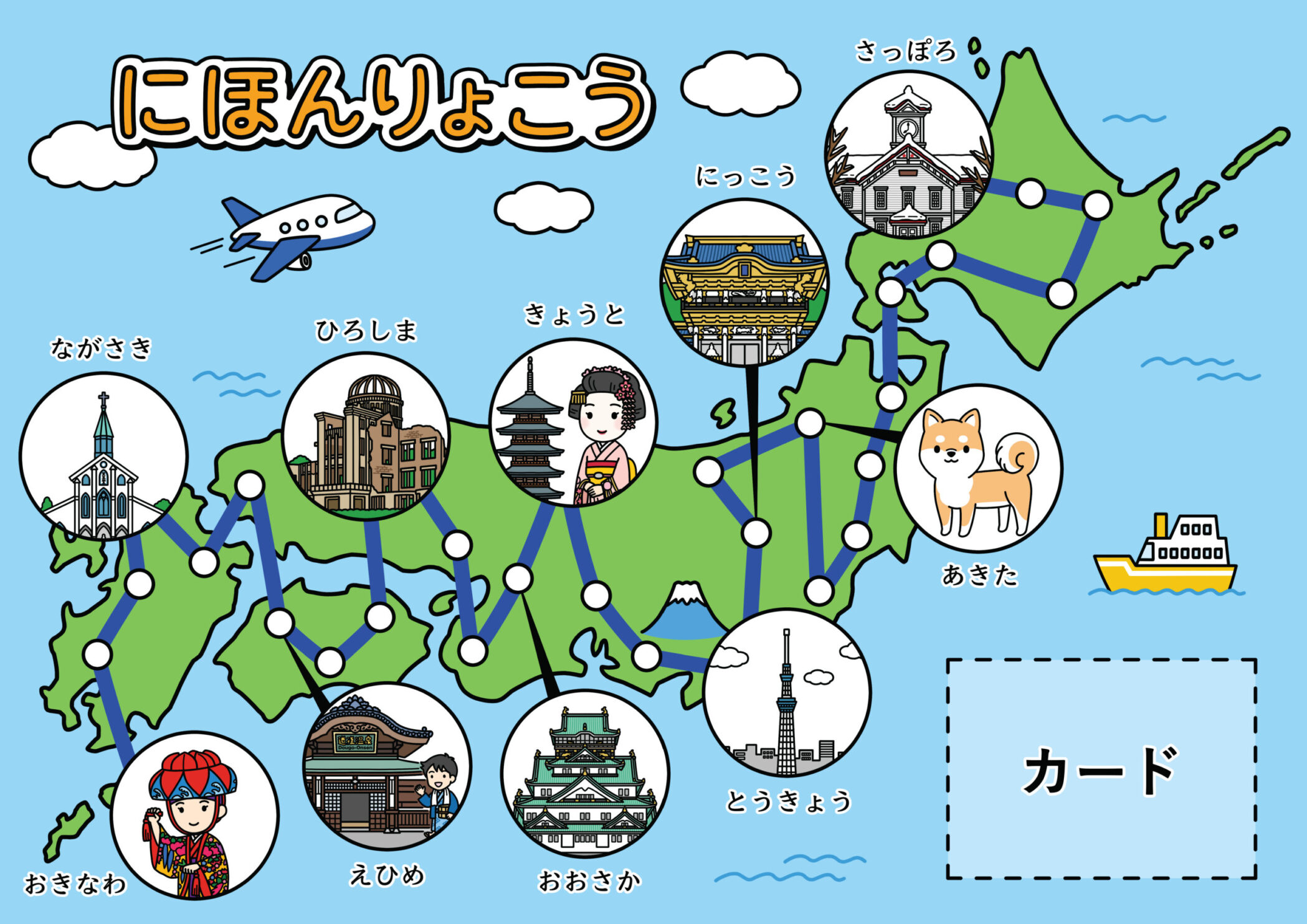
BOARD GAME: Travel Around Japan
BOARD GAME: Travel Around Japan


Click the cover page image below to enjoy reading!
Students will learn about 日本のふゆ (Japanese winter) while reading the digital flipbook. The flipbook is created using Japanese scripts with supporting pictures to help students understand the story.
Please click on the cover page or use the link below to open the flipbook.
Nihongo flipbooks → https://classroomresources.sydney.jpf.go.jp/resources/nihongo-flipbooks/
In Japan, ふゆ lasts from December to February. The temperature drops, and the coldest period is usually from late January to early February. Snow falls mainly in Hokkaido, the Tohoku region, and areas along the Sea of Japan.
Schools typically have a winter break of about two weeks starting in late December, and many companies are closed from December 29 to January 3. During the New Year’s period, many people return to their hometowns or go on trips.
In this flipbook, you will see several typical images of ふゆ in Japan. As you go through the flipbook, think about what ふゆ in Japan is like.
Teachers may ask students some questions to activate prior knowledge (schema) and spark their interest in reading the story about ふゆ. See examples below.
e.g.
Q1. Does your country have ふゆ? What months? Do you like ふゆ?
Q2. What do you usually do in ふゆ?
Q3. (For students from countries/regions without ふゆ) What do you imagine ふゆ is like?
Use questions like these to check students’ understanding.
Are these statements “True (〇)” or “False (×)”?
Q1. ふゆ in Japan is cold. (〇)
Q2. ふゆ doesn’t have as much seasonal food in Japan.(× かに、りんご etc)
Q3. In Japan, you can do snow activities in ふゆ.(〇)
After that, talk about if people in your country do the same activities as in Japan during in ふゆ.
Activity Idea 1: Let’s Write!
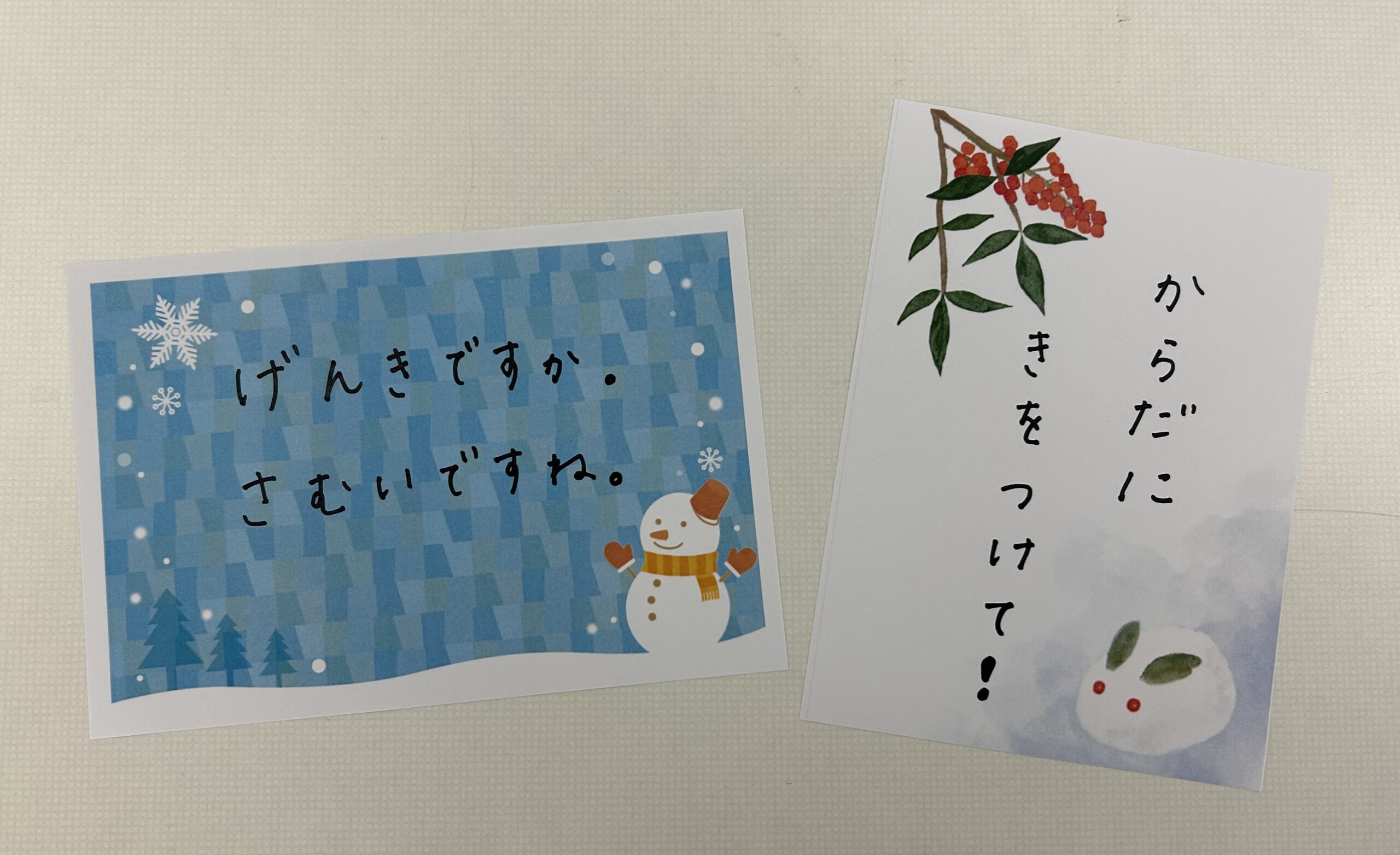
In Japan, there is a custom of sending greeting cards called 寒中見舞い during the coldest part of ふゆ. Snow is a common motif on postcards for this occasion.
Let’s try making a card by drawing pictures such as snowmen or snow rabbits.
Useful expression
| さむいですね | It’s so cold, isn’t it? |
| げんきですか | How are you? |
| からだに きをつけて | Take care of yourself. |
| かぜに きをつけて | Be careful not to catch a cold. |
| おげんきで | Stay well.(Formal) |
| げんきでね | Stay well.(Casual) |
| さむいけど、がんばって | It’s cold, but let’s do our best! |
| また あそびましょう | Let’s hang out again sometime. |
Activity Idea 2: Let’s Sing!
Let’s sing the song “ゆき (Snow)”. This children’s song is well-known in Japan and describes the scene of snow falling.
YouTube: https://www.youtube.com/watch?v=yp5BdN4APos 
If you’d like to sing it with hand motions, see this version:
Activity Idea 3: Let’s Talk!
If you were to travel to Japan in ふゆ, where would you go? What would you do? Talk with your classmates about your dream winter trip.
Example 1
A:日本で 何を しますか。
B:スキーをします。こたつに 入ります。みかんを 食べます。
A:いいですね。
Example 2
A:日本で 何が したいですか。
B:わたしは なべが 食べたいです。かにの なべです。
A:いいですね。わたしは おんせんに 入りたいです。
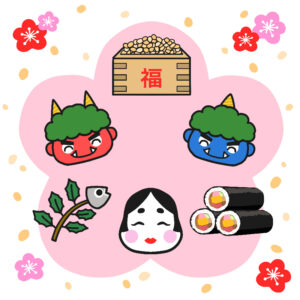
Resource created by Tomomi Chiba and Himiko Negishi-Wood (December 2025).
BOARD GAME: Travel Around Japan
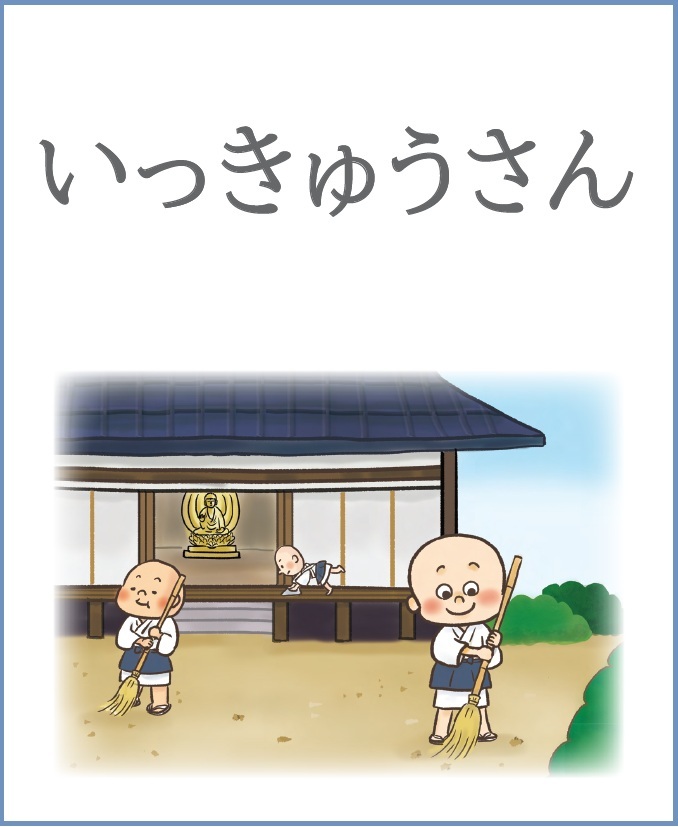
FLIPBOOK: Ikkyu-san
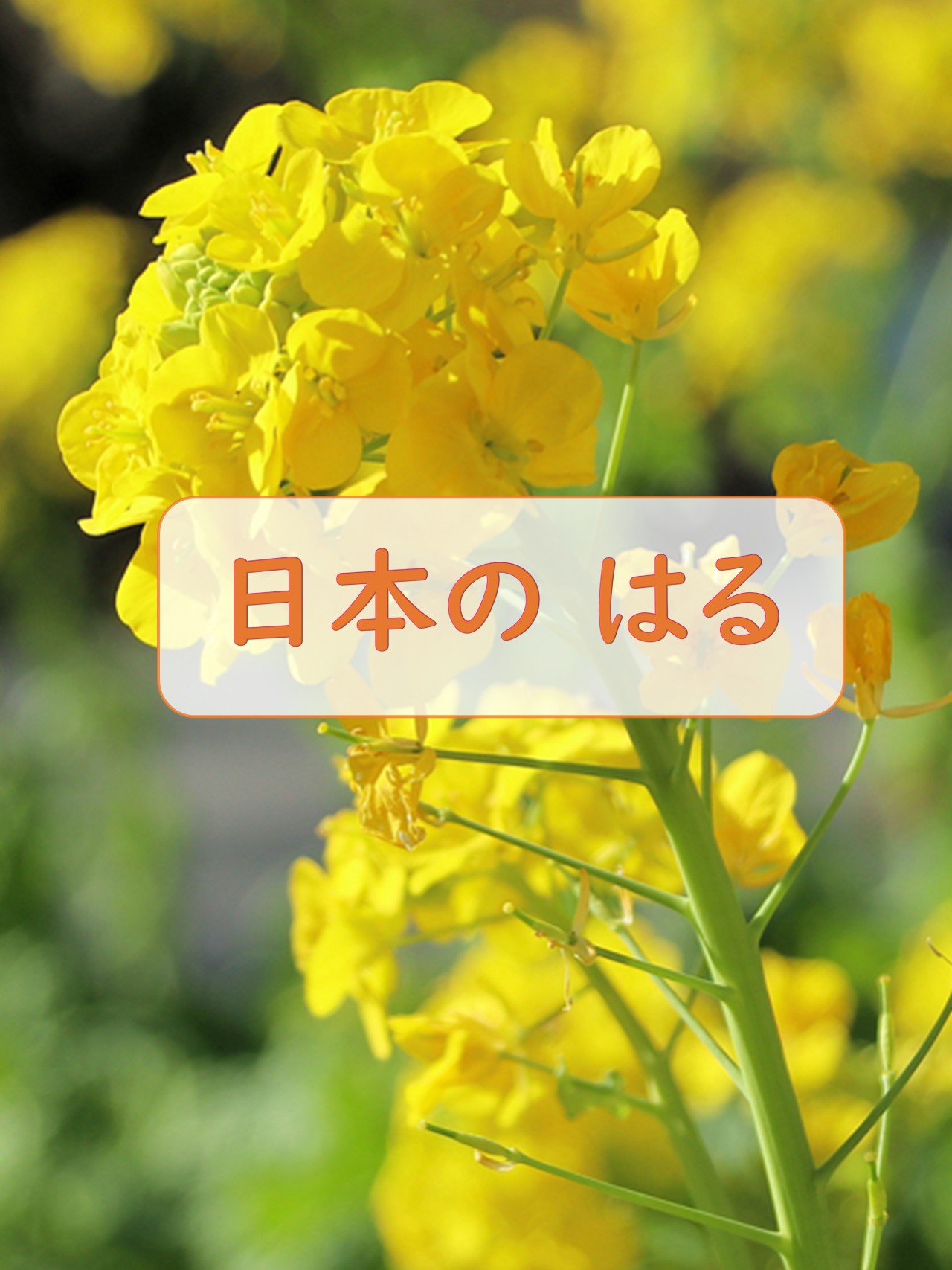
Students explore spring in Japan through a flipbook and related activities.
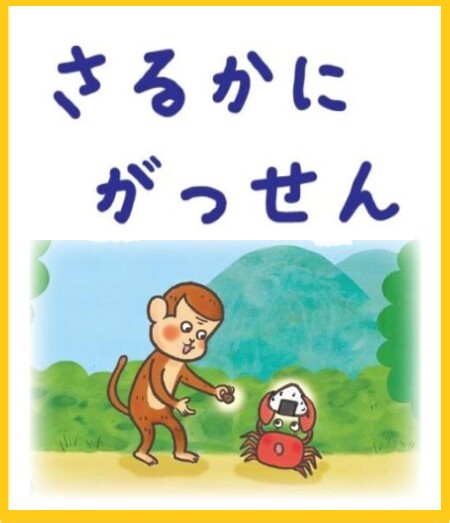
FLIPBOOK: Sarukani Gassen (The battle of the crab and the monkey)