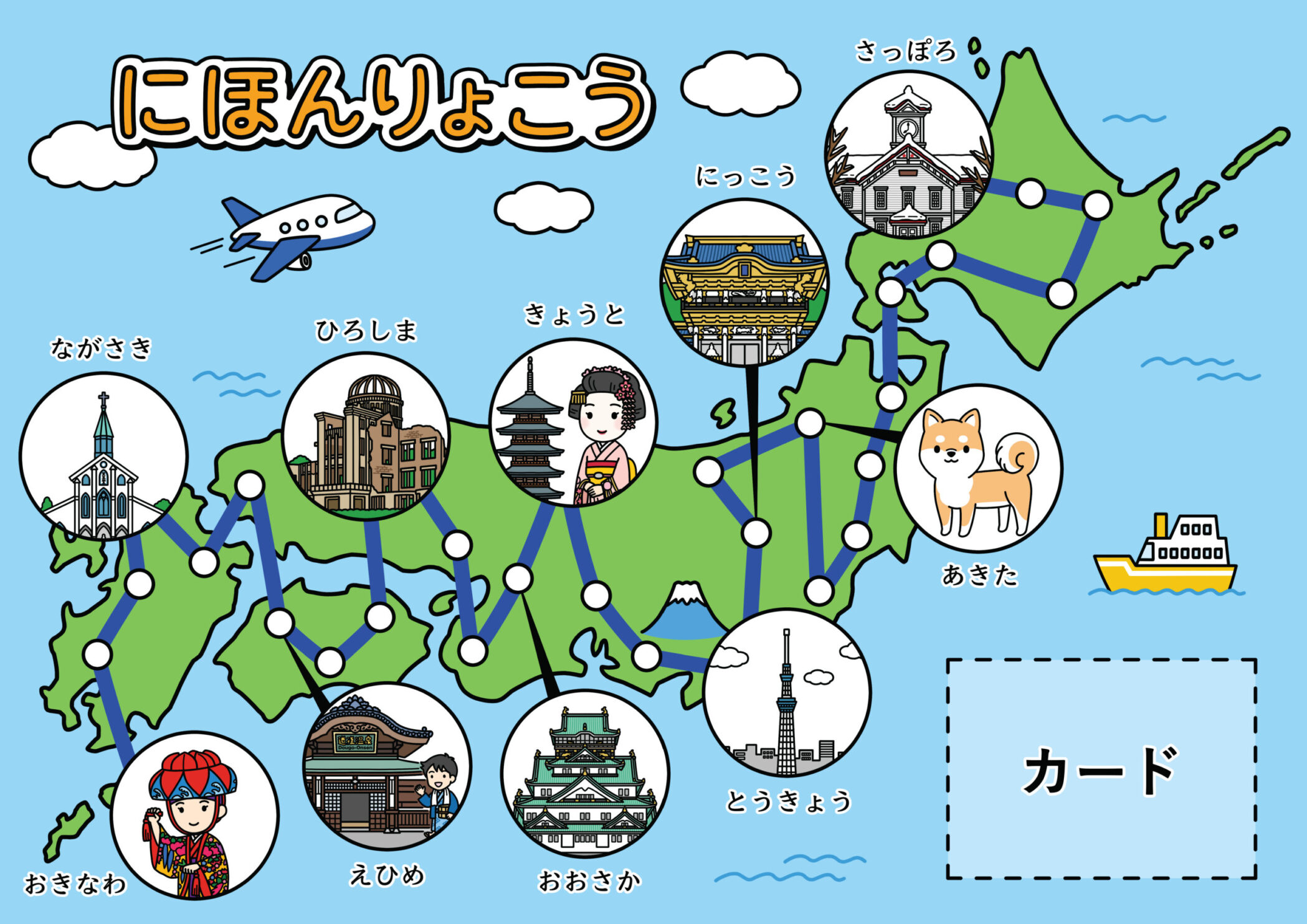
BOARD GAME: Travel Around Japan
BOARD GAME: Travel Around Japan


FLIPBOOK: CREATION MYTH OF JAPAN
Click the cover page image below to enjoy reading!
Students read a bilingual flipbook based on the Japanese creation myth from Kojiki, the oldest surviving collection of Japanese myths, and reflect on its story and themes by answering the questions below.
Once upon a time, when the world was still young and floating like oil, two gods, Izanagi no Mikoto and Izanami no Mikoto, were commanded to create the land. Standing upon the Floating Bridge of Heaven, they stirred the sea with the Heavenly Jewelled Spear. The brine that dripped from its tip formed an island where they were married around a sacred pillar. Together, they brought forth the islands of Japan and many deities, including the gods of rivers, mountains, fields, trees, stones, and fire.
When Izanami died after giving birth to the fire god, Izanagi journeyed to Yomi no Kuni, the Land of the Dead, in search of her. Unable to bring her back, he returned and purified himself in a river through the ritual of Misogi. From his left eye was born Amaterasu Oomikami, Goddess of the Sun; from his right eye, Tsukuyomi no Mikoto, God of the Moon; and from his nose, Susanoo no Mikoto, God of Storms. Izanagi entrusted them with the heavens, the night, and the sea. Thus, the land of Japan and its gods came into being.
Note: To make the story accessible and enjoyable for young readers, the original story has been simplified or parts omitted. In particular, the episode of Izanagi’s journey to Yomi no Kuni, the Land of the Dead, is not included in this retelling.
Explore our other Nihongo flipbooks! → https://classroomresources.sydney.jpf.go.jp/resources/nihongo-flipbooks/
The Story Of The Birth Of Japan
Myths give us insight into ancient peoples’ lives and beliefs, giving meaning to many customs and ceremonies practiced today. Students may have studied the creation stories of other cultures, such as the Aboriginal story of the ‘rainbow snake’, or the Hebrew creation story. The first written record of Japan’s myths is found in Kojiki (712, Records of Ancient Matters).
天照大神
Literally the ‘Great Divinity Illuminating Heaven’, Amatera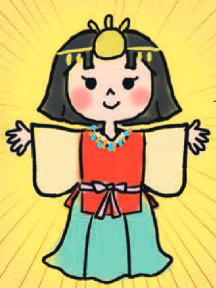 su is the principal female deity of Japanese mythology. According to the 古事記 “Records of Ancient Matters”, she was born from the left eye of Izanagi and was assigned to rule 高天原 “the High Plain of Heaven”. Japan’s first emperor was said to be descended from Amaterasu, and she is worshipped at 伊勢神宮 the Ise Shrine.
神道 and 神
Shinto is Japan’s indigenous religion. The worship of 神 “the divine force found in gods of nature and heavenly gods”, which slowly emerged at the dawn of Japanese history. It emerged as an imperial religious system during the Heian Period and from then on was in constant interaction with Buddhism and Confucianism. Shinto was made the state religion of Japan from the Meiji Period until 1945. Now Shinto and Buddhism, along with other religions exist side by side, and the ceremonies and festivals of one religion are often mirrored by the other in marking significant events in Japanese life.
1. Who were the gods who gave birth to Japan according to the story? (Answer: Izanagi and Izanami)
2. Why did Izanagi bathe in a river? (Answer: Purification)
3. According to the story, who was born from Izanagi’s left eye? (Answer: Amaterasu Oomikami)
4. Do you know any creation myths from other cultures? Are there similarities with this myth?
Arranging the Story
Download and print the story for students to read.
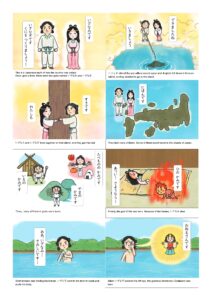 Variation 1: Arrange the story in order
1. Print out the page and cut the story panels apart.
2. Ask students to read them and arrange the story in order.
3. For more advanced students, separate the English text from the pictures.
Variation 2: Match text and images
1. Give students the English story strips and the story images separately.
2. Ask students to match each text strip to the correct picture.
This resource was updated by Himiko Negishi-Wood, Tomohiko Fujita and Tomomi Chiba. (October 2026).
Illustration by amachakoubou (https://amachakoubou.com/)
BOARD GAME: Travel Around Japan
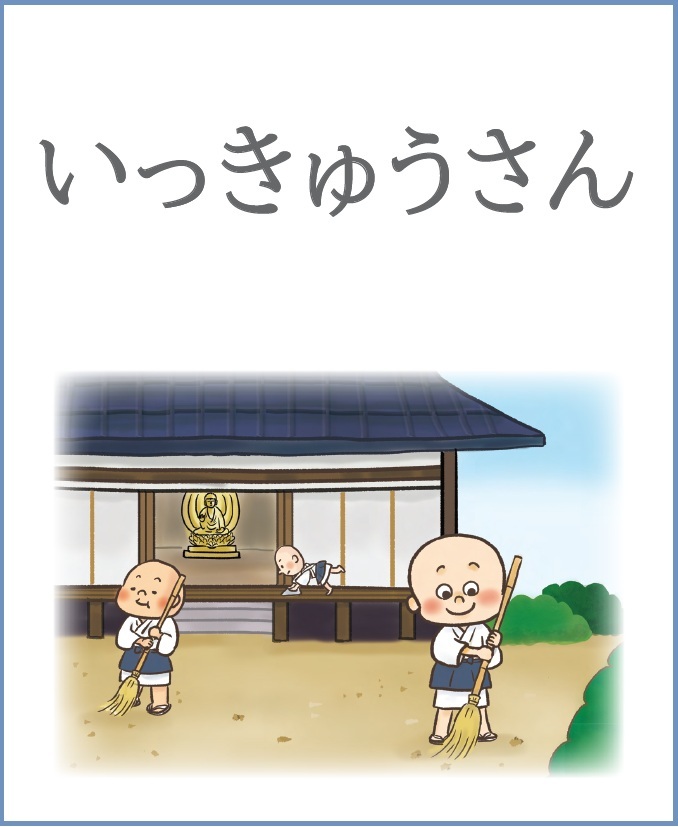
FLIPBOOK: Ikkyu-san
Students explore spring in Japan through a flipbook and related activities.
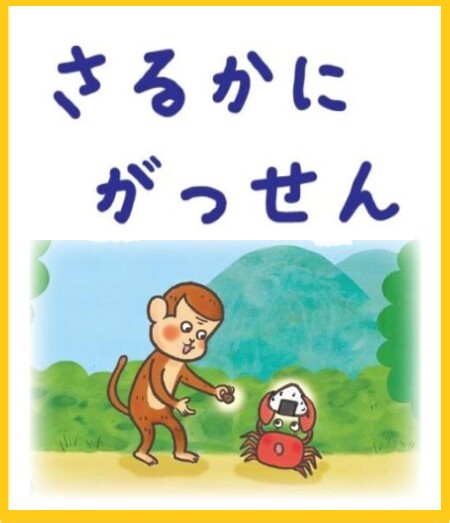
FLIPBOOK: Sarukani Gassen (The battle of the crab and the monkey)